Right then, let’s have a good, honest chat about your website. As a UK-based chap who spends most of his days thinking about search engines and how to make businesses shine online, I’ve seen a fair few websites that have, shall we say, overstayed their welcome. Think of your website as your digital shopfront or your virtual office. If it’s looking a bit drab, hard to navigate, or frankly, a bit… erm… yesterday, then it’s probably time to consider a refresh.
In 2026, the digital landscape moves at breakneck speed. What looked cutting-edge a few years ago can now feel as dated as a dial-up modem. So, how do you know when it’s time to invest in a website redesign? It’s not just about a lick of fresh paint; it’s about ensuring your online presence is working for you, attracting customers, and giving them a bang-up experience.
If you’re nodding along or even feeling a slight pang of dread, don’t worry. That’s exactly why we’re here. Let’s delve into the tell-tale signs that suggest your website might be crying out for a makeover.
First off, let’s talk about first impressions. In the bustling digital marketplace, your website is often the very first interaction a potential customer has with your brand. If it looks like it belongs in a digital museum, you’re already on the back foot.
The “Early 2010s” Vibe
Remember when websites were often dominated by clunky Flash animations, garish colours, and bewildering layouts? If your site still evokes that era, it’s a glaring sign. Think about it: are your competitors sporting sleek, modern designs with intuitive interfaces and professional imagery? If so, your outdated aesthetic isn’t just a minor niggle; it’s actively making you appear less credible and less professional.
Falling Behind the Curve
In 2026, and indeed for the past few years, modern web design prioritises clean lines, user-friendly navigation, and a clear visual hierarchy. Visitors expect a polished, sophisticated online experience. A website that looks like it was built from a generic, untweaked template from years gone by screams “lack of investment” and, more worryingly, “lack of innovation.” It suggests you’re not keeping up with the times, which can be a deal-breaker for potential clients.
A Lost Sense of Identity
Beyond just looking old, an outdated site may no longer align with your brand’s evolving identity. If your logo has been updated, your colour palette refreshed, or your core messaging refined, but your website hasn’t followed suit, it creates a jarring disconnect. This visual inconsistency can confuse your audience and dilute your brand’s impact.
The Laggard’s Lament: When Speed Becomes a Stumbling Block
Speed is no longer a luxury; it’s a necessity. In today’s “on-demand” world, we’ve all become impatient. If your website is taking its sweet time to load, you’re essentially waving goodbye to potential customers before they even get a chance to see what you offer.
The Crucial First Few Seconds
Studies consistently show that users will abandon a website if it doesn’t load within a few seconds. For 2026, the benchmark is tighter than ever. If your pages are consistently taking longer than 2–3 seconds to become fully interactive, you are losing visitors, and quite possibly, sales. This isn’t just about user frustration; it’s a direct hit to your conversion rates.
The Double Whammy: SEO and User Experience
Slow load times aren’t just bad for user experience; they’re a significant SEO penalty. Google and other search engines prioritise fast-loading websites. In fact, Core Web Vitals, a set of metrics that Google uses to measure user experience, directly considers loading speed. If your site is sluggish, your rankings will suffer, meaning fewer people will even find you in the first place. It’s a vicious cycle.
What’s Sapping Your Site’s Strength?
What causes slow load times? It can be a multitude of things: large, unoptimised images; bloated code; poor server hosting; too many plugins; or inefficient third-party scripts. Identifying the culprit is the first step to addressing it, but if the problem is deep-seated, a redesign can offer an opportunity to rebuild from the ground up with speed as a top priority.
The Mobile Meltdown: Are You Ignoring the Majority?
It’s the 2020s, and the vast majority of internet browsing is done on mobile devices. If your website isn’t designed for a seamless mobile experience, you’re alienating a huge chunk of your audience.
The Pinch-and-Zoom Pains
Imagine trying to read a tiny block of text on your phone, then having to pinch and zoom just to make it legible. Or clicking a button that’s barely bigger than your fingertip and missing it entirely. If this sounds familiar, your website is not mobile-friendly. This isn’t just inconvenient; it’s a barrier to engagement and conversion.
Mobile-First is Paramount
In 2026, a “mobile-friendly” website is the absolute minimum. The expectation is for a responsive design that adapts fluidly to any screen size. This means text should be easily readable without zooming, buttons should be tappable, and the overall layout should be intuitive and easy to navigate on a smartphone or tablet.
A Direct Hit to Your Rankings
Just like slow load times, a poor mobile experience is a major red flag for search engines. Google, in particular, uses mobile-friendliness as a significant ranking factor. If your site isn’t optimised for mobile, you’ll struggle to rank well in mobile search results, which, as we’ve established, is where most users are.)
The Content Conundrum: A Clunky CMS Troubles Your Team
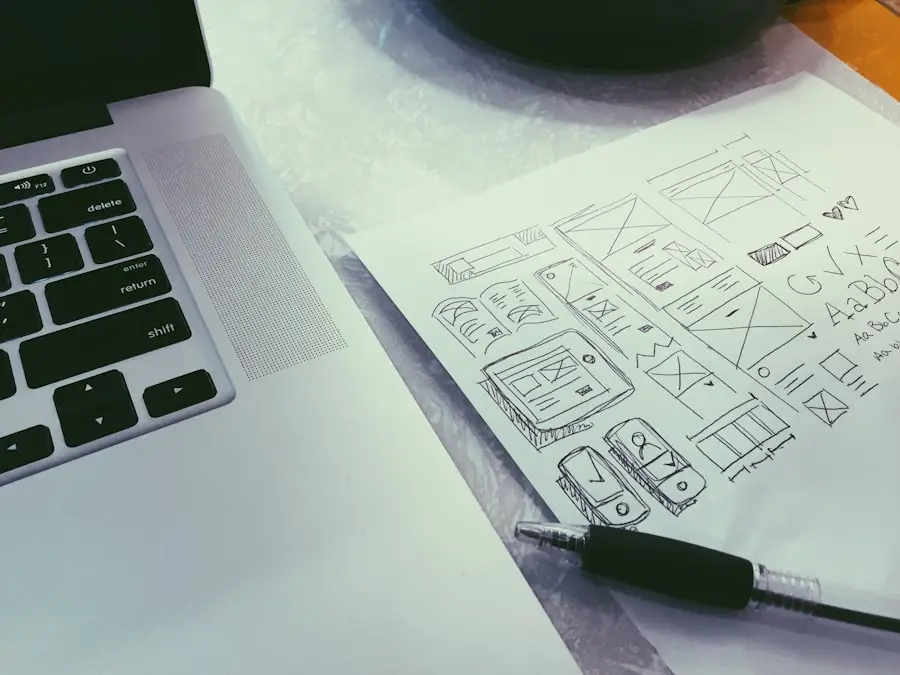
Your website is a living entity, constantly needing updates, new blog posts, product descriptions, and service information. If your Content Management System (CMS) is a headache for your team to use, it’s not just an operational inefficiency; it’s a creative roadblock.
Fighting with Your CMS
Is your team struggling to update even simple page content? Do they need to call in a developer for every minor text change? A clunky, unintuitive CMS means that fresh, relevant content is less likely to be published. This stagnation makes your website feel stale and can significantly harm your SEO.
Missing Out on Automation and Efficiency
Modern CMS platforms offer a wealth of features for automation, workflow management, and user roles. If your current system feels basic and restrictive, you’re missing out on opportunities to streamline your content publishing process, improve team collaboration, and ensure consistency across your site.
The Cost of Inefficiency
The time and frustration spent battling an inefficient CMS translate directly into lost productivity and, potentially, lost revenue. If your team is spending hours on tasks that should take minutes, it’s a strong indication that a redesign, accompanied by a robust and user-friendly CMS, is in order.
The Evolving Identity Crisis: When Your Website Stops Reflecting You
Businesses don’t stand still. They grow, they adapt, they refine their offerings and their brand. If your website hasn’t kept pace with this evolution, it’s no longer an accurate representation of who you are today.
Reflecting Your Current Brand
Has your business undergone a rebrand? Have you changed your logo, your colour palette, or your overall brand messaging? If your website still sports the old look and feel, it creates confusion and can make your business appear unprofessional or out of touch. A redesign is essential to ensure your online presence aligns with your current brand identity.
Showcasing Your Latest Services and Products
Perhaps your business has expanded its range of services, launched new products, or pivoted its focus. If your website doesn’t clearly and effectively showcase these developments, you’re missing out on valuable opportunities to inform and attract customers. It’s like having your shop window displaying last year’s stock.
The Company Culture Connection
Beyond the visual and the offerings, your website should also subtly convey your company culture and values. If your website feels generic or doesn’t capture the essence of your team and your approach, it’s a missed opportunity to build rapport and trust with your audience. A redesign can help inject your personality and your unique selling propositions into your digital presence.
The Silent Killer: Declining Leads and Conversions
This is perhaps the most crucial indicator. All the other signs can lead to this one: your website is not performing. If your traffic is stable or even increasing, but your leads, sales, or enquiries are dropping, your website is likely the bottleneck.
The Conversion Conundrum
Are people visiting your site but not taking the desired action? This could be filling out a contact form, making a purchase, downloading a brochure, or requesting a quote. A lack of conversions, even with decent traffic, points to fundamental issues with your website’s design, user experience, or calls to action.
The Traffic vs. Transformation Trade-off
You might be getting clicks from search engines or social media, but if those visitors aren’t converting into engaged prospects or paying customers, those clicks are essentially wasted. Your website needs to be not just a brochure, but a powerful sales tool.
Root Causes of Conversion Collapse
The reasons for declining conversions are varied, but often include:
- Poor user journey: Visitors can’t find what they’re looking for, or the path to conversion is unclear.
- Unpersuasive calls to action: Your CTAs are bland, hidden, or not compelling enough.
- Lack of trust signals: No testimonials, security badges, or clear contact information.
- Technical glitches: Broken forms, non-functional buttons, or slow loading pages.
- Irrelevant content: The content doesn’t match user intent or answer their questions effectively.
A redesign allows you to reassess and rebuild your website with conversion optimisation as a core principle.
The Visibility Vanishing Act: Slipping Down the Search Rankings
Your website might be beautiful and functional, but if no one can find it, its impact is severely limited. Declining SEO rankings are a strong signal that your website’s technical foundation or content strategy is falling behind.
The Lost Art of URLs and Meta Tags
Are your URL structures logical and keyword-rich? Are your meta descriptions and titles compelling and informative? Outdated SEO practices, such as poor URL structures, missing or unoptimised meta tags, and a lack of internal linking, can severely hamper your search engine visibility.
Content That’s Past Its Sell-By Date
Google prioritises fresh, relevant, and high-quality content. If your website hasn’t been updated with new content or if your existing content is outdated and no longer answers user queries, search engines will penalise you by pushing you further down the rankings.
Technical SEO Troubles
Beyond content, technical SEO is vital. This includes site speed, mobile-friendliness, crawlability, indexability, and schema markup. If your website has underlying technical SEO issues, it will struggle to rank, regardless of how good your content is. A redesign can offer a clean slate to implement best-practice technical SEO from the outset.
The Digital Disease: Security and Plugin Pitfalls
In an age of increasing cyber threats, website security is non-negotiable. If your website is constantly experiencing issues, it’s not just an annoyance; it’s a significant risk to your business and your customers’ data.
The Fragile Framework
Frequent crashes, error messages popping up unexpectedly, or plugins that constantly break can be signs of an outdated or poorly maintained website. This instability can be incredibly frustrating for users and can lead to lost data or functionality.
The Vulnerability Vortex
Outdated software, especially plugins and themes, can contain security vulnerabilities that hackers can exploit. If your website isn’t regularly updated and patched, you’re leaving the door wide open for malicious attacks, which can lead to data breaches, malware infections, and reputational damage.
The Cost of Neglect
The cost of a security breach or a website outage can be astronomical, far outweighing the investment in a proactive website redesign. A redesign typically involves upgrading to secure, up-to-date technologies and implementing robust security measures from the start.
The Navigation Nightmare: A User Experience Gone Awry
Even with great content and a good-looking design, if users can’t easily find what they’re looking for or navigate your site intuitively, they’ll leave. Poor user experience (UX) is a silent killer of conversions.
The Three-Click Rule (or Lack Thereof)
A common UX principle is that users should be able to find what they need within three clicks. If your website’s navigation is convoluted, your pages are cluttered, or information is buried deep within your site structure, users will struggle. This leads to frustration and abandonment.
Clutter and Inaccessibility
A visually overwhelming or poorly organised website can be just as damaging as difficult navigation. Think about clear visual hierarchy, ample white space, and accessible design principles. If your site feels cramped, confusing, or difficult for everyone to use (including those with disabilities), it’s a UX red flag.
The Impact on Engagement
When users have a positive and seamless experience on your website, they are more likely to engage with your content, spend more time on your site, and ultimately, convert. Conversely, a poor UX will drive them away, often straight into the arms of a competitor.
The “Embarrassed to Share” Syndrome
This is the ultimate, gut-wrenching sign. If you find yourself actively avoiding sending potential clients or customers to your own website because you’re embarrassed by its appearance, functionality, or message, then it’s unequivocally time for a redesign.
Misrepresenting Your Business
Your website is a digital ambassador for your brand. If it doesn’t accurately reflect the quality, professionalism, and value of your business, it’s actively doing you damage. It creates a disconnect between what customers expect and what they find, leading to disappointment and lost opportunities.
A Drag on Your Sales Efforts
Imagine attending a networking event or having a client meeting. If you can’t confidently direct them to your website to learn more, view your portfolio, or see your services, you’re undermining your own sales efforts. It suggests a lack of confidence in your own online presence.
The Path to Renewed Pride
A redesign should result in a website you are proud of – one that accurately represents your brand, showcases your offerings effectively, and provides an excellent user experience. It should be a tool you actively want to share and use to drive your business forward.
So, there you have it. If you’ve spotted two or more of these signs, it’s a strong indication that a website redesign is on the cards. If you’re seeing four or more, then your website isn’t just outdated; it’s actively hindering your business’s growth and success in 2026 and beyond.
Don’t let your website be a barrier to your potential. Embracing a redesign is an investment in your business’s future, ensuring you make a fantastic first impression, provide a seamless user experience, and ultimately, drive the results you’re aiming for. It’s time to get your digital presence back in ship-shape!